


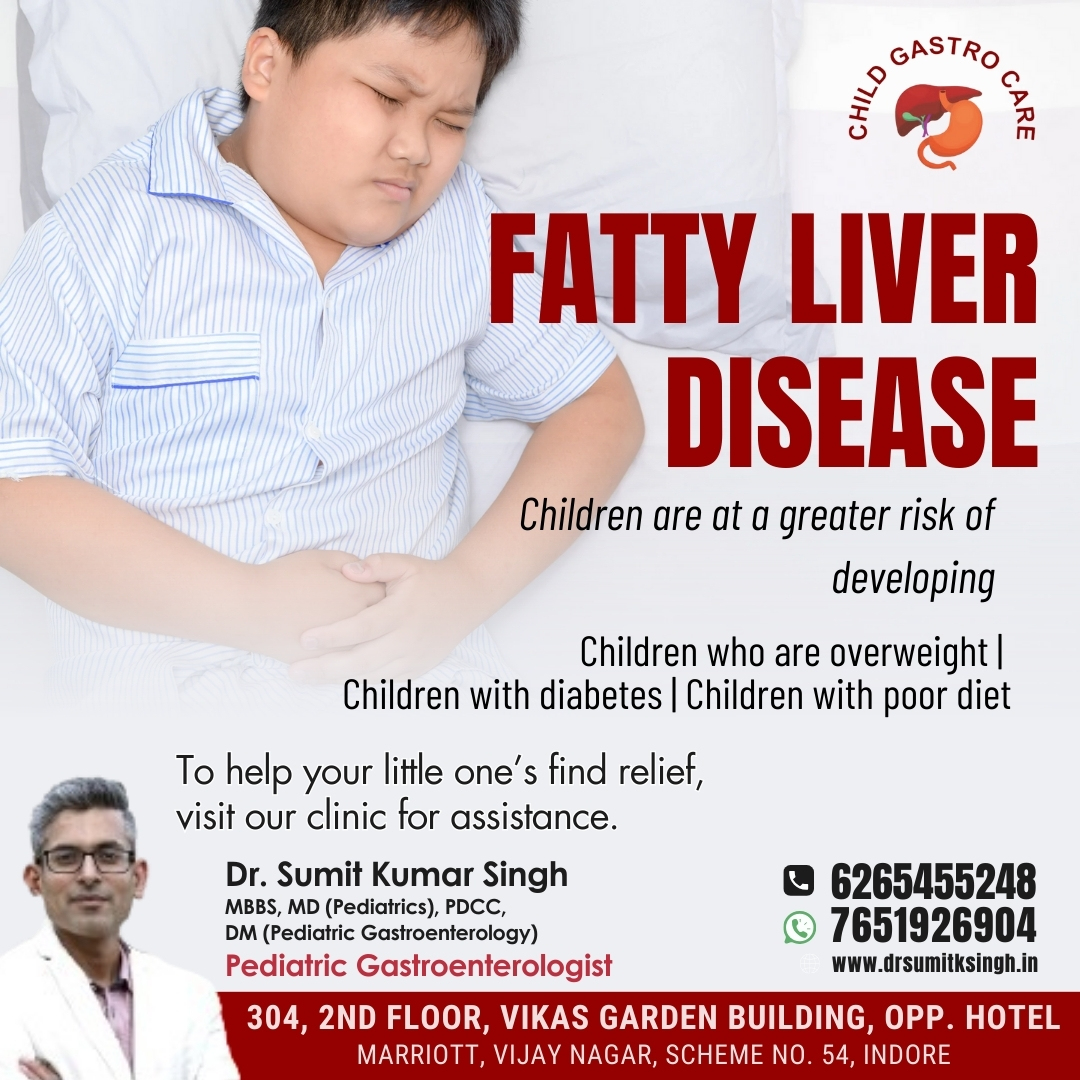
Finding “fatty liver” on a child’s report can leave parents wondering what it means and what to do next. A child fatty liver treatment specialist in Indore can assess the finding, investigate possible causes and recommend care that considers both liver health and normal growth. Treatment should follow an individual evaluation, not an adult diet plan or a product promising rapid results.
Families can consult Dr. Sumit Kumar Singh at CHILD GASTRO CARE to discuss their child’s reports and concerns. Bring previous investigations, growth records and details of current medicines so the consultation begins with a clear picture of your child’s health.
What Is Fatty Liver in Children?
Childhood fatty liver means excess fat has accumulated in the liver. Parents may encounter the older term NAFLD, or nonalcoholic fatty liver disease. The newer term MASLD refers to metabolic dysfunction-associated steatotic liver disease.
The condition does not have the same severity in every child. Some children have fat accumulation without significant inflammation, while others develop inflammation and liver injury. In certain cases, this can lead to scarring. A report mentioning fatty liver does not, by itself, establish how much inflammation or damage is present.
Understanding this distinction helps families avoid both unnecessary panic and the assumption that the finding can be ignored.
Can a Child Have Fatty Liver Without Symptoms?
Yes. Fatty liver in children often causes few or no noticeable symptoms. Some children may experience tiredness or discomfort in the upper right abdomen, but these complaints have many possible causes and cannot confirm the diagnosis.
For this reason, an active child who appears well may still need assessment if a clinician identifies abnormal liver tests or an imaging concern. Equally, ordinary stomach pain should not automatically be labelled fatty liver without evaluation.
Why Does Childhood Fatty Liver Develop?
The condition is associated with several factors, including excess body weight, insulin resistance, type 2 diabetes and abnormal blood fats. Family history and genetic influences may also play a role.
It is unhelpful to blame a child or attribute the diagnosis to one food. The consultation should explore the wider picture, including health history, routines and relevant test results.
When discussing your concerns, describe ordinary weekdays and weekends honestly. The purpose is to identify practical care needs, not to judge the family’s habits.
When Should Parents Seek Advice?
Consider a pediatric liver consultation in Indore when your child’s doctor recommends further evaluation of abnormal liver enzymes, suspected fatty liver or another liver concern. An ultrasound finding also deserves interpretation in the context of the child’s health.
Before booking, note:
Avoid postponing a recommended review simply because your child has no pain. Ask the referring doctor how soon assessment is needed.
How Is Fatty Liver Evaluated in Children?
Evaluation may include medical and family history, a physical examination and selected investigations. The clinician reviews growth and may request liver blood tests alongside tests for other possible causes of abnormal results.
Liver ultrasound in children can suggest fat accumulation, but it cannot reliably establish inflammation or the full extent of liver injury. An elevated ALT or AST level also requires interpretation rather than being treated as a diagnosis on its own.
Specialised imaging or a liver biopsy may be considered in selected cases. A biopsy is not required for every child; the specialist decides whether it would clarify the diagnosis or influence treatment.
Ask what each proposed test is intended to answer. This makes the evaluation easier to understand and helps you plan any required follow-up.
What Does Child Fatty Liver Treatment Involve?
Child fatty liver treatment commonly focuses on sustainable nutrition and activity changes, with weight goals appropriate to age and growth. For some younger children, maintaining weight while height increases may be appropriate; others may need gradual, medically supervised weight reduction.
Set Individual Goals
Ask the clinician to explain the priorities for your child. Avoid choosing a target weight or deadline from social media. A growing child needs a plan that accounts for development and overall health.
Discuss Food and Drinks
Healthy eating and reducing sugary drinks are important parts of care. Rather than banning whole food groups yourself, seek an age-appropriate plan and clarify suitable portions and alternatives.
Bring examples of school lunches, snacks and drinks to the appointment. These details allow the discussion to address real choices instead of producing advice that is difficult to follow at home.
Make Activity Practical
Regular physical activity is another part of management. Ask what is appropriate for your child’s health and abilities. Discuss activities they enjoy and when these can fit around school, homework and family commitments.
Review Supplements Before Use
Do not start “liver detox” products, herbal remedies or high-dose supplements without medical advice. Some supplements can harm the liver. Share the exact products already being used so the doctor can review them.
Supporting Your Child Without Blame
How a family discusses treatment matters. Keep conversations focused on health, energy and workable routines rather than criticism about appearance. Avoid comparing the child with siblings or classmates.
Invite your child to help choose practical changes. For example, ask which activity they would enjoy or which school-day routine feels hardest to manage. A teenager may have different concerns from a younger child, so leave room for their questions.
If grandparents or other caregivers prepare meals, share the agreed plan with them. Consistent instructions are easier to follow than different rules from each adult. Tell the care team when an approach is causing distress or conflict so it can be discussed.
Why Follow-Up Matters
Pediatric fatty liver care is a continuing process rather than a single report review. Ask how the clinician will assess progress, which tests may need repeating and when the next appointment should take place.
Keep reports in date order and record questions between visits. Explain which changes were manageable and which were not. This gives the team useful context for reviewing the plan.
Avoid setting your own schedule for repeated scans or tests. Clarify the purpose and timing of monitoring with the specialist, and do not assume that one improved result means follow-up is no longer needed.
Planning a Consultation in Indore
When arranging child liver care in Indore, confirm the appointment process, consultation charges and records required. Ask whether any proposed investigations need separate scheduling or preparation; do not make your child fast unless instructed for a specific test.
Families travelling from outside the city can enquire about how reports should be shared and whether another visit may be necessary. Planning these details helps reduce avoidable travel and disruption to school.
Choose a consultation where your questions are welcomed and recommendations are explained. Clear communication helps parents understand the difference between a suspected finding, a confirmed diagnosis and a treatment goal.
Frequently Asked Questions
Can childhood fatty liver improve?
It can improve with appropriate management, but the response varies with the underlying condition and severity. A specialist should assess progress; no fixed timeline or permanent cure can be guaranteed.
Does a “mild fatty liver” ultrasound report mean no further care is needed?
No. Ultrasound wording does not fully establish liver inflammation or scarring. The finding should be reviewed alongside the child’s history, examination and relevant tests.
Should I put my child on a strict weight-loss diet?
No. Ask for a plan that supports growth and adequate nutrition. Whether weight maintenance or gradual reduction is appropriate depends on the individual child.
What if my child finds the recommended changes difficult?
Discuss the obstacles at follow-up rather than hiding them. Explain problems with school meals, activity opportunities or family routines so the team can help you develop a more workable approach.
Contact Us for a Child Fatty Liver Consultation in Indore
An informed assessment can turn a worrying report into a clearer plan for your child’s care. If you are seeking a child fatty liver treatment specialist in Indore, consult Dr. Sumit Kumar Singh at CHILD GASTRO CARE to discuss the findings, evaluation options and next steps. Contact Us today to enquire about appointments and arrange your child’s consultation.
| Tags: | #Child Fatty Liver Treatment in Indore |


