

When a child develops repeated loose stools or starts vomiting, parents often wonder whether it is a passing stomach upset or something that needs medical attention. Recognising gastroenteritis symptoms in children means looking beyond the number of bathroom trips: drinking, urination and alertness matter too. For consultation enquiries, contact CHILD GASTRO CARE to ask about an appointment with Dr. Sumit Kumar Singh, and describe your child’s age and current symptoms.
This guide explains the common signs, the importance of hydration and the changes that should prompt urgent care.
Gastroenteritis affects the stomach and intestines. Infectious causes include viruses, bacteria and parasites. Diarrhoea and vomiting in children are common symptoms, sometimes accompanied by stomach cramps or fever.
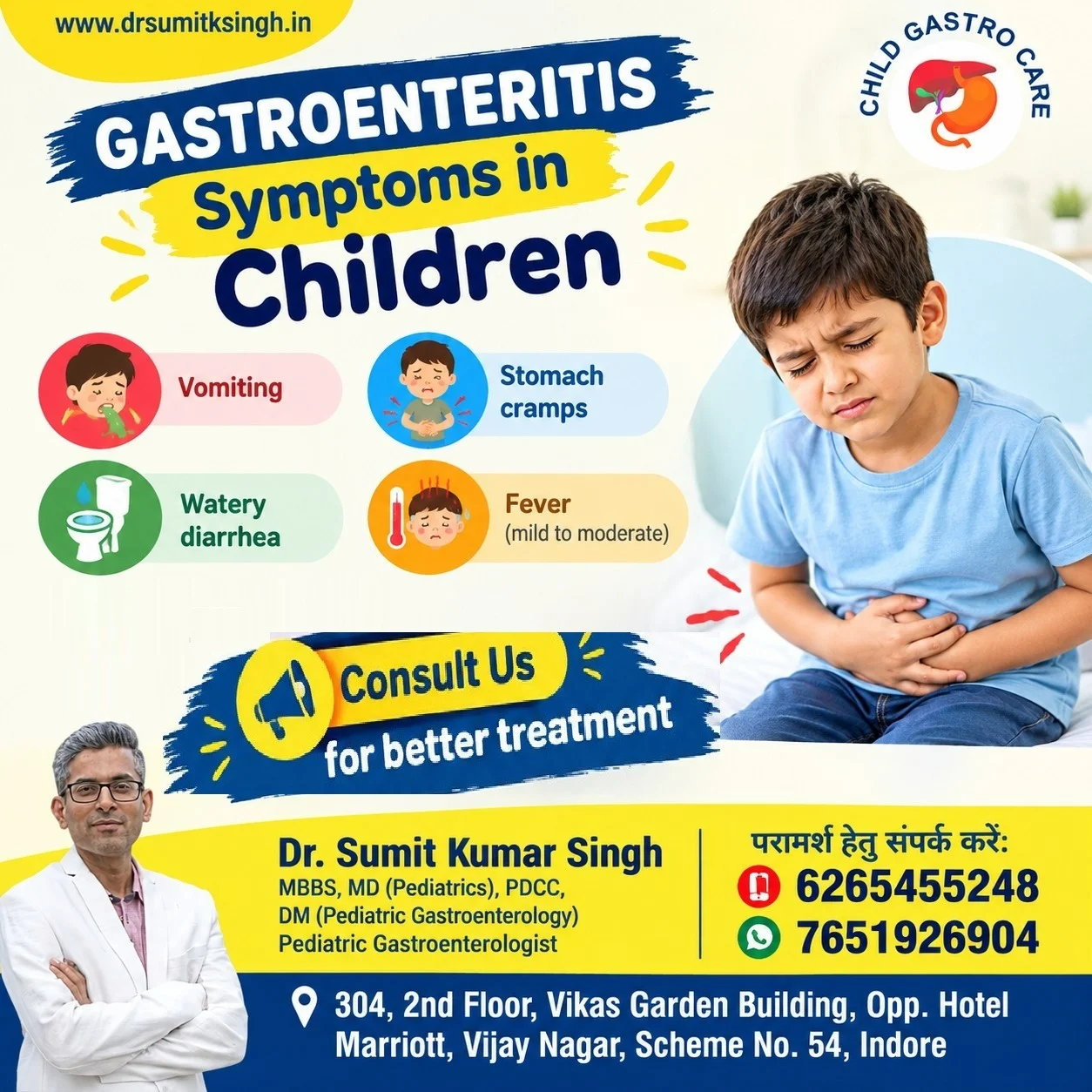
Parents may notice:
Watery stools occurring more frequently than usual.
Nausea or repeated vomiting.
Abdominal discomfort or cramping.
A raised temperature.
These symptoms can resemble other illnesses, so their presence alone does not confirm the diagnosis. A child with significant pain or worsening symptoms needs assessment rather than an assumption that it is simply a stomach infection.
Keep a short record of when symptoms began and how they are changing. “Three watery stools since breakfast” gives the clinician more useful information than “a bad stomach.”
Dehydration in children develops when fluid losses exceed what the child drinks. Vomiting and diarrhoea can make that balance difficult to maintain, especially in babies.
Warning signs include:
Fewer wet diapers or less frequent urination.
Darker urine.
Dry lips or mouth.
Few or no tears when crying.
Sunken eyes.
Unusual drowsiness or irritability.
Seek prompt medical advice if these signs appear. Difficulty waking, confusion, cold or blotchy skin, or breathing problems require emergency care.
Tell the clinician when your child last passed urine and whether they are drinking normally. Avoid judging hydration only by whether the child asks for water.
Some symptoms require immediate assessment, even if diarrhoea has also occurred.
Seek emergency care immediately for green or yellow-green vomit, blood in vomit, sudden severe abdominal pain, serious breathing difficulty, or a child who is confused or not responding normally.
Arrange urgent medical advice if there is blood in the stool, repeated vomiting that prevents fluids staying down, or a baby stops breast or bottle feeding. Do not wait for a routine appointment when these warning signs occur.
A baby younger than three months with a temperature of 38°C or higher needs urgent medical assessment.
Babies under six months with suspected gastroenteritis should be assessed early because they are more vulnerable to dehydration.
Infections can spread through contaminated food or water and through contact with an infected person. Poor hand hygiene can carry germs between people and the items they touch. Viruses are one cause, but bacterial and parasitic infections can also produce diarrhoea.
During a consultation for a suspected stomach infection in children, mention recent travel, shared meals and whether other family members have similar symptoms. These details provide context without proving where the illness came from.
Oral rehydration solution (ORS) replaces water and salts lost through diarrhoea. Prepare it using safe water and exactly the quantity specified on the packet; do not add extra salt or sugar. Ask a healthcare professional about the amount suitable for your child.
Small, frequent amounts may be easier to tolerate than a large drink. If your child cannot retain fluids, is becoming less responsive or shows worsening dehydration, seek urgent care. Severe dehydration may require treatment in hospital.
Keep the packet available so anyone helping with care can follow the same preparation instructions.
Continue breastfeeding. Formula-fed babies should generally receive their usual formula, prepared at its normal strength. As appetite returns, children can usually resume their usual age-appropriate food; a prolonged restrictive diet is generally unnecessary.
Fruit juice and fizzy drinks can worsen diarrhoea and should be avoided during the illness.
Discuss feeding difficulties with the treating clinician, particularly for infants. Ask for a clear plan if vomiting is interfering with feeds.
Antibiotics do not treat viral gastroenteritis. Other causes may need different management, so medication decisions depend on the assessment. Over-the-counter medicines used to stop diarrhoea can be unsafe for children; avoid giving them without medical advice.
India’s National Health Mission promotes ORS and zinc for childhood diarrhoea. Ask your child’s doctor about the appropriate zinc preparation, dose and course, and follow those instructions.
An assessment for child diarrhoea treatment in Indore begins with the symptom history and an examination. The clinician may ask about vomiting, stool frequency, illness duration, medicines, travel and contact with others who are unwell.
The examination helps assess hydration, fever and abdominal tenderness. Mild, short-lived viral gastroenteritis often does not require testing. Stool tests or other investigations may be considered when the findings suggest a different problem or further assessment is needed.
Useful questions include:
What should we offer to drink, and how often?
Which changes mean we should seek help immediately?
What should we do if another dose of medicine is vomited?
When should the child be reviewed?
For families in Indore, Madhya Pradesh, a brief symptom timeline makes the conversation easier to follow. Bring previous reports, details of medical conditions and the names of any medicines already given.
Record the temperature, recent urine output and how much your child has managed to drink. If several adults share care, keep these observations in one place.
Before travelling for a pediatric gastroenterology consultation in Indore, confirm the consultation address and appointment availability. Describe urgent symptoms when contacting the provider so the team understands the situation.
Wash hands thoroughly with soap and water after toilet use or diaper changes and before handling food. Clean contaminated surfaces and wash soiled clothing or bedding. Avoid sharing towels and utensils during the illness.
Safe drinking water, good food hygiene and appropriate rotavirus vaccination also help prevent diarrhoeal illness. Discuss your child’s vaccination record with their healthcare provider.
Make these routines practical for the household: keep soap accessible, identify who will clean contaminated items and ensure caregivers know the hygiene plan.
Yes. Vomiting can appear first, with diarrhoea developing later. However, persistent vomiting without diarrhoea also needs medical advice, particularly when accompanied by significant pain or poor fluid intake.
Water does not replace the salts lost in diarrhoea. ORS is designed to replace both fluid and electrolytes. Ask the clinician how to use it alongside your child’s usual feeds and other suitable fluids.
No. Symptoms and examination may be enough when the illness is mild and brief. The doctor decides whether testing would help clarify the diagnosis or investigate another possible cause.
A common recommendation is to wait until the child feels well and has had no vomiting or diarrhoea for at least 48 hours. Also follow the treating clinician’s advice and the school’s illness policy.
Understanding gastroenteritis symptoms in children helps parents communicate clearly and recognise when care is needed.
For consultation availability in Indore, contact CHILD GASTRO CARE to enquire about an appointment with Dr. Sumit Kumar Singh. Share your child’s symptoms, bring relevant records and discuss a care plan suited to the assessment.
Contact Us Today to Arrange Your Child’s Gastroenterology Consultation.
| Tags: | #Gastroenteritis Symptoms in Children – Indore |


