


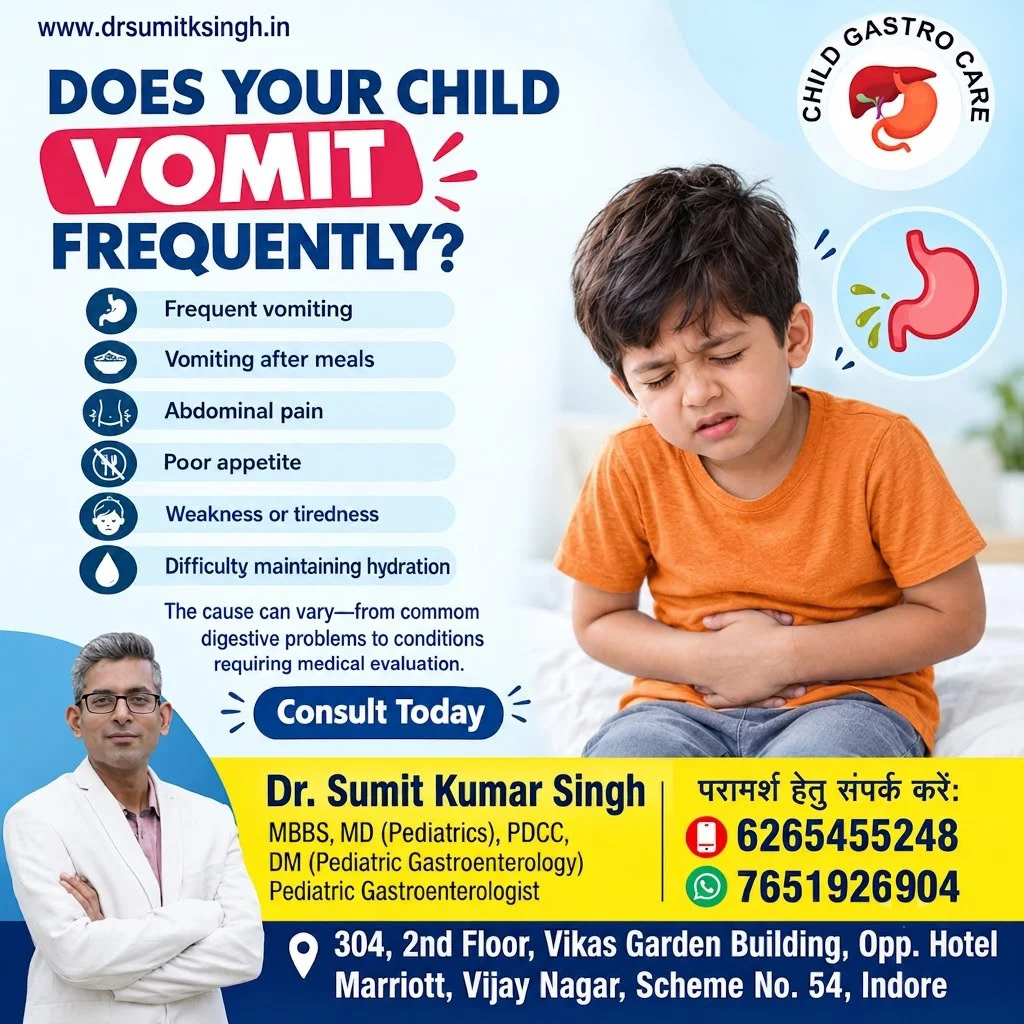
When a child repeatedly vomits, everyday routines can become difficult. Meals may end early, school days are interrupted, and parents start wondering whether their child is getting enough fluids and nutrition. The pattern matters: vomiting during a short illness needs a different assessment from episodes that keep returning over several weeks.
Families seeking Frequent Vomiting Treatment in Children in Indore can discuss their concerns with Dr. Sumit Kumar Singh at CHILD GASTRO CARE. Sharing when vomiting happens, what accompanies it, and how the child behaves between episodes helps make the consultation more useful.
Start by checking your child’s alertness, breathing, ability to drink, and urine output. Seek emergency care if vomiting is accompanied by:
Repeated vomiting with an inability to keep fluids down also needs urgent medical assessment. Fewer wet nappies, markedly reduced urination, a dry mouth, and unusual sleepiness can indicate dehydration.
Young babies who vomit repeatedly or stop feeding need prompt medical review. For serious warning signs, go to the nearest emergency department instead of waiting for a routine clinic appointment.
Frequent vomiting in children is a symptom with several possible explanations. The child’s age, duration of illness, associated symptoms, and growth help guide the assessment.
A stomach infection can cause vomiting, sometimes with diarrhoea, abdominal discomfort, or fever. Other infections can also produce vomiting. The accompanying symptoms help the clinician decide what needs examination and whether investigations are necessary.
Reflux involves stomach contents moving back towards the food pipe. In some children, this may occur with discomfort, food refusal, or poor growth. Food allergy or intolerance can also be considered when the history suggests it.
Vomiting after eating does not identify the cause by itself. Explain whether particular foods repeatedly seem associated with symptoms and seek advice before making major dietary exclusions.
Some children have distinct attacks separated by periods when they appear well. Cyclic vomiting syndrome is one possible explanation, but it requires an appropriate assessment to consider other causes. Recording the timing and similarity of attacks can help the doctor understand this pattern.
Arrange an assessment when vomiting keeps returning, affects eating, or interferes with normal activities. A pediatric gastroenterologist in Indore may assess concerns such as:
Describe how these concerns have changed over time. A child who is comfortable between occasional episodes presents a different picture from one who is steadily eating less and losing weight. Both deserve a clear account of the symptoms.
Preventing dehydration in children is a priority during vomiting. If the child is alert and able to swallow, small, frequent amounts of an appropriate oral rehydration solution may be easier to tolerate than a large drink. Ask a healthcare professional about the amount suitable for the child’s age and condition.
Prepare ORS sachets with the exact quantity of safe water stated on the packet. Continue breastfeeding. For formula-fed babies, follow advice about feeding and keep formula at its recommended strength.
Fruit juice and fizzy drinks are unsuitable substitutes for ORS, particularly when diarrhoea is present. Once hydration is restored and the child can tolerate food, usual age-appropriate meals can be reintroduced as advised. Avoid forcing large meals.
If the child refuses fluids, repeatedly brings them back up, or develops dehydration signs, seek urgent care. Home care should not delay medical assessment when drinking is failing.
An assessment for recurrent vomiting in children begins with a detailed history and examination. The doctor may ask:
The examination includes checking hydration and looking for signs that suggest a particular cause. Investigations are selected according to the findings. Some children may need blood or urine tests; imaging or endoscopy may be considered for specific concerns.
Discuss what a proposed test is intended to clarify. The purpose is to investigate the child’s particular pattern and decide the next step in care.
Treatment for vomiting in children may include rehydration, feeding guidance, and care directed at the condition identified during assessment. A child with significant dehydration may need hospital treatment when oral fluids are insufficient.
For recurring problems, the plan may include reviewing nutrition, identifying relevant triggers, or managing an underlying digestive condition. Follow-up helps assess whether symptoms and growth are improving.
Use medicines only as directed for that child and illness. Avoid repeating an old anti-vomiting prescription without advice. If a child vomits a prescribed medicine, ask the treating clinician what to do before giving another dose.
A short diary can make recurring symptoms easier to explain. Note the date, approximate number of episodes, relation to meals, associated symptoms, fluid intake, and urination. Record any medicine given and whether it stayed down.
For school-age children, ask them to describe what they felt before vomiting. Nausea, pain, and dizziness may be difficult to explain unless someone asks calmly. Keep observations factual and share them at the appointment without assuming that a particular food or event is definitely responsible.
Parents seeking child vomiting treatment in Vijay Nagar, Indore should bring previous prescriptions, available reports, growth records, and the symptom diary. Mention any previous admissions and known food or medicine reactions.
The consultation address is 304, 2nd Floor, Vikas Garden Building, opposite Hotel Marriott, Vijay Nagar, Scheme No. 54, Indore. Confirm the appointment time before travelling. At the end of the consultation, clarify the feeding plan, medicine instructions, follow-up needs, and symptoms that should prompt urgent care.
1. Does vomiting after meals always mean acidity?
No. Meal timing is useful information, but several conditions can cause vomiting after eating. Explain any pain, swallowing difficulty, food refusal, or growth concerns so the doctor can assess the possible cause.
2. Can a child become dehydrated without diarrhoea?
Yes. Repeated vomiting and reduced drinking can lead to dehydration even without loose stools. Watch for reduced urination, a dry mouth, fewer tears, and unusual tiredness, and seek medical advice promptly.
3. What if my child seems completely well between attacks?
Recurrent episodes still deserve assessment, particularly when they interrupt eating or school. Note how long attacks last and whether they follow a similar pattern. Well periods alone do not establish a diagnosis.
4. Will every child need an endoscopy?
No. The need for endoscopy depends on the history, examination, and suspected condition. Ask what concern the procedure would investigate and how its findings could influence the treatment plan.
5. Should I give an anti-vomiting medicine immediately?
Seek advice before using one, especially for babies or recurring symptoms. The choice and dose depend on the child and cause. Emergency warning signs or inability to keep fluids down require assessment.
Seeking Frequent Vomiting Treatment in Children in Indore can help you understand the pattern, address hydration concerns, and discuss care suited to your child.
Contact CHILD GASTRO CARE to arrange a consultation with Dr. Sumit Kumar Singh. Bring your child’s records and explain your main concerns. Contact Us Today.
| Tags: | #Frequent Vomiting Treatment in Children in Indore |


