


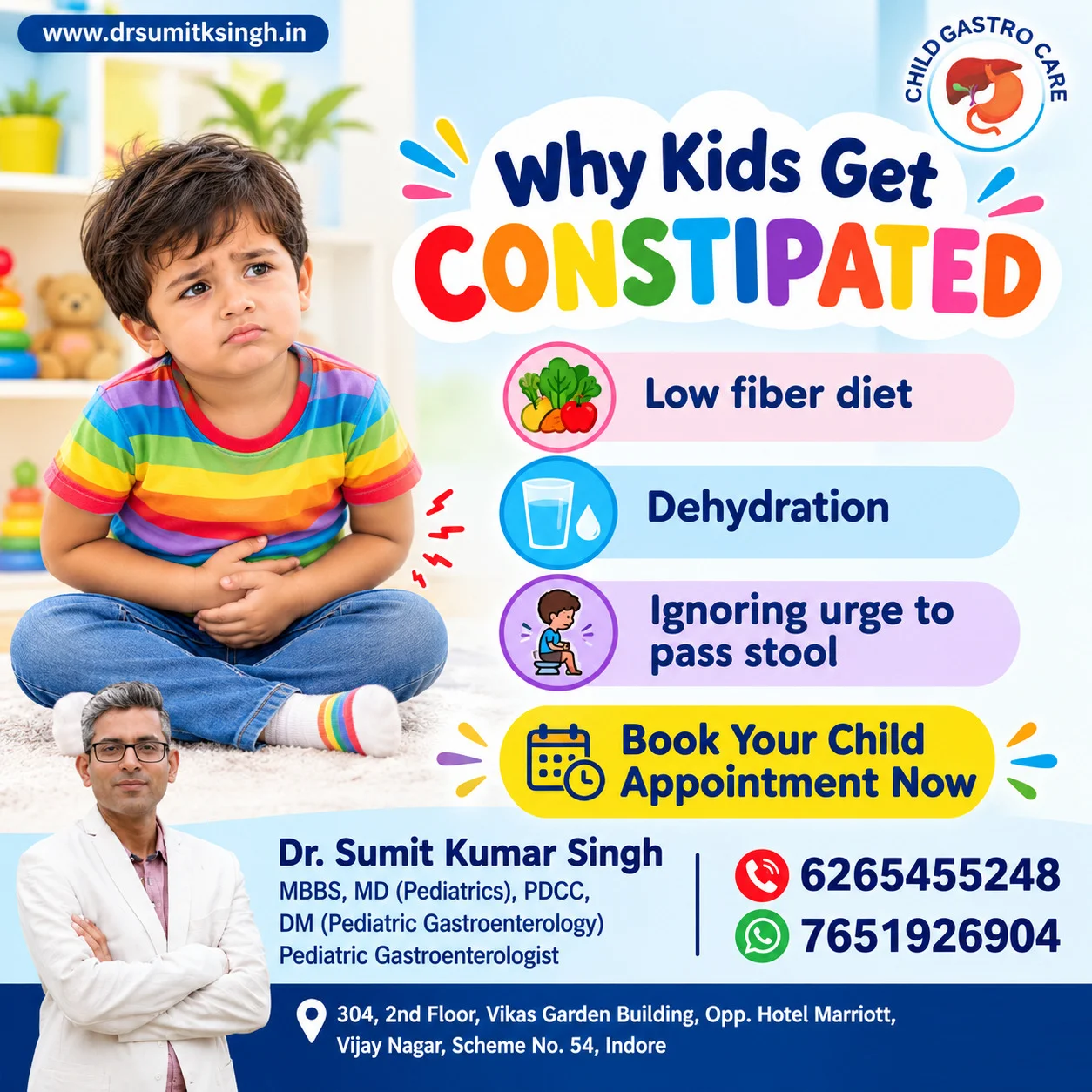
Child Constipation Treatment in Indore begins with understanding your child’s stool pattern, discomfort, and daily habits. Treatment aims to make bowel movements comfortable, address retained stool when necessary, and reduce withholding. Depending on the assessment, this may involve prescribed medicine alongside changes to food, fluids, and toilet routines.
Parents sometimes first notice a change in behaviour: a child hides behind furniture, stiffens their legs, or becomes upset when asked to use the toilet. These actions can be attempts to hold stool in because passing it has become painful.
For an individual assessment, Dr. Sumit Kumar Singh, Pediatric Gastroenterologist, can review the symptoms and discuss an appropriate care plan.
Constipation in children involves more than counting toilet visits. The consistency of the stool, pain during passage, and signs of holding back also matter.
Possible symptoms include:
· Hard, dry, lumpy, or unusually large stools.
· Pain or difficulty when passing stool.
· Bowel movements becoming less frequent than usual.
· Abdominal discomfort or reduced appetite.
· Repeated stool marks or leakage in underwear.
Describe what you are seeing without expecting your child to explain everything. Younger children may show discomfort through their posture or behaviour before they can put it into words.
A diet with limited fruit, vegetables, pulses, and whole grains may provide too little fibre. This can contribute to constipation, especially when low-fibre snacks regularly replace more varied meals.
Discuss the child’s usual eating pattern with the doctor. A realistic plan should account for age, food preferences, feeding difficulties, and any other health needs.
Not drinking enough can contribute to harder stools. Fluid requirements vary with age, size, activity, and health.
For older children, regular opportunities to drink can be built into meals and school routines. Babies need age-specific feeding advice; avoid changing formula preparation or introducing constipation remedies without guidance.
Stool withholding can begin after a painful bowel movement. A child may then avoid the toilet because they expect the same pain again.
As stool remains in the colon, more water is absorbed from it, making it harder to pass. This can reinforce the pattern of discomfort and avoidance. Reluctance to use school toilets, interruptions during play, or pressure around toilet training may contribute.
Loose stool or staining in underwear can sometimes occur when softer stool leaks around a build-up of retained hard stool. This is known as overflow soiling and can be mistaken for diarrhoea.
Children may not realise the leakage is happening. Respond calmly and arrange an assessment if accidents are recurring. Scolding adds stress to a problem that already feels uncomfortable or embarrassing.
Tell the doctor about both hard stools and leakage so the full pattern is considered.
A consultation usually starts with questions about when the problem began, what stools look like, how often they pass, and whether there is pain or bleeding. The doctor may also review eating habits, medicines, growth, and toilet training.
A physical examination helps guide the diagnosis. Many children do not require extensive tests; further investigations are selected when the history, examination, or response to treatment suggests they are needed.
When visiting a pediatric gastroenterologist in Indore, bring previous prescriptions and any relevant reports. A short stool diary can make the discussion clearer.
For a toilet-trained child, sitting on the toilet after meals can help establish a routine. Keep the experience relaxed and avoid prolonged pressure to produce a bowel movement.
Praise cooperation, including sitting calmly, even when no stool passes. Ask whether the child is worried about the toilet, privacy, or discomfort.
A child should feel secure while sitting. A suitable foot support can help prevent the legs from dangling and improve toilet positioning.
Discuss any ongoing pain with the treating doctor. The routine needs to work alongside treatment that keeps stools comfortable to pass.
If your child avoids school toilets, ask what makes them difficult to use. They may need more time, privacy, or permission to go when the urge appears.
A discreet conversation with the appropriate school staff can help organise practical support while respecting the child’s comfort.
Fibre-rich foods for children can include age-appropriate portions of lentils, beans, vegetables, fruit, and whole grains. Introduce changes gradually and offer foods in forms suitable for the child’s age and eating ability.
Aim for a varied routine the family can maintain. Discuss appropriate fluid intake, particularly if the child eats more fibre.
Established constipation often needs more than extra water or dietary changes. Follow the prescribed plan while improving everyday habits, and ask before adding fibre supplements or other products.
A doctor may recommend a laxative to soften stools. If a significant amount of stool has accumulated, an initial plan to clear it may be needed before ongoing treatment.
The medicine, dose, and duration depend on the child’s assessment. Avoid choosing adult products, enemas, or repeated home remedies independently.
Recovery can take time, and some children need treatment for several months. Continue follow-up and ask how medicines should be adjusted or reduced. A few comfortable bowel movements do not necessarily mean the treatment plan is complete.
Arrange medical advice for persistent or recurring constipation, painful stools, or repeated soiling.
Seek prompt assessment for blood in the stool, weight loss, or ongoing abdominal pain. Severe abdominal pain, marked swelling, or vomiting—particularly when occurring together—needs urgent medical attention.
Symptoms present from birth or the first weeks of life also require medical evaluation. These situations should be assessed before treating the problem as routine constipation.
Yes. Hard or painful stools and withholding can still indicate constipation even when some stool passes regularly. Tell the doctor about consistency, discomfort, and leakage as well as frequency.
Adequate fluids are important, especially when intake has been low. However, extra water alone may not resolve established constipation. A child may also need prescribed treatment and support with toilet habits.
The duration varies with the severity and how long symptoms have been present. Some children need ongoing treatment for months. Follow the agreed review schedule and ask before stopping or changing medicines.
No. Constipation is often assessed through the medical history and examination. The doctor recommends additional tests when there is a specific reason, such as concerning symptoms or an unexpected response to treatment.
No. Overflow soiling can happen without the child intending it or noticing it. Calm reassurance, appropriate treatment, and a supportive routine help families manage the situation without adding embarrassment.
Painful toilet visits can affect a child’s confidence and the family’s routine. For Child Constipation Treatment in Indore, consult Dr. Sumit Kumar Singh to discuss the symptoms and suitable next steps.
Visit 304, 2nd Floor, Vikas Garden Building, opposite Hotel Marriott, Vijay Nagar, Scheme No. 54, Indore.
Call to enquire about an appointment. Contact Us today to arrange an assessment and plan more comfortable bowel habits for your child.
| Tags: | #Child Constipation Treatment in Indore |


